Start With the Business Goal
Before selecting a format, describe the change the video should create. A business may need to explain a technical service, build trust before a consultation, support a sales conversation, recruit employees, document an event, or maintain a steady social presence. Each goal points toward a different combination of filming and editing.
Audience and platform matter just as much. A detailed YouTube or website video can give viewers context, while a short vertical edit must communicate one idea quickly. Not every business needs every production service, and a focused plan usually produces stronger material than a long list of disconnected deliverables.
Corporate and Company Videos
Corporate videos introduce a company, explain a service, present leadership, support recruitment, or show how a team works. They often combine interviews with B-roll from an office, facility, client environment, or active workplace. The story should make the business understandable without sounding like a list of claims.
This format works well when the company needs one durable piece for its website, presentations, proposals, or sales follow-up. A main company video can also provide shorter topic-based edits when those versions are planned before filming.
Testimonials and Interview-Driven Content
A testimonial lets a client, patient, partner, or customer explain an experience in their own words. Interview-driven content can also feature executives, specialists, employees, or subject-matter experts who need to communicate clearly without memorizing a script.
These projects depend on comfortable direction, thoughtful follow-up questions, clean audio, and an edit that preserves the speaker's meaning. They are useful for trust, education, recruitment, case studies, and professional-service marketing where the person behind the message matters.
Podcasts and Multi-Camera Conversations
Video podcasts and multi-camera conversations are designed around an ongoing exchange rather than one edited interview. They may involve a host and guest, several speakers, or a recurring series that needs a consistent visual and audio setup from episode to episode.
The production plan should consider microphone placement, camera coverage, recording length, graphics, episode openings, full-length delivery, and short promotional clips. A simple conversation may need fewer crew members than a live show, but reliable audio and synchronized cameras remain essential.
Social Media Videos, Reels, and Shorts
Social video is usually built around a narrow topic, a strong opening, readable captions, and a format suited to the platform. Reels and Shorts often use vertical framing, while LinkedIn and website placements may still benefit from horizontal or square versions.
The most efficient approach is to plan a series rather than treat every clip as a separate production. One filming session can capture several answers, demonstrations, tips, or campaign messages, then turn them into a consistent set of short edits.
Medical and Healthcare Video
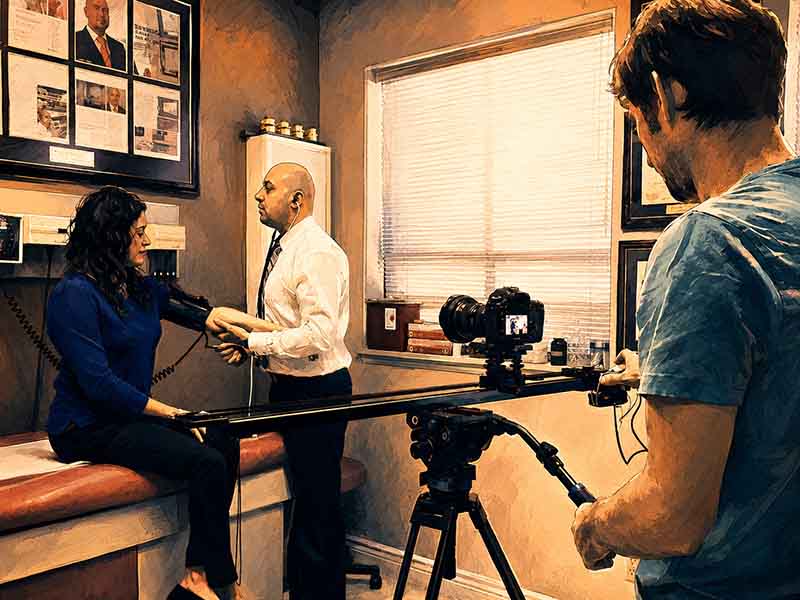
Healthcare production can include physician profiles, patient education, treatment explanations, clinic introductions, staff interviews, training, and carefully documented patient stories. The format must support trust and clarity while respecting privacy, consent, safety, and the realities of a working clinical environment.
Medical topics often benefit from calm interview direction, accurate language, clear graphics, and supporting visuals that make a process easier to understand. The service should be selected around the audience, whether that is a patient, referring professional, internal team, or broader public.
Industrial and Manufacturing Video
Industrial video helps buyers, partners, employees, and stakeholders understand equipment, capability, process, scale, and quality control. It may combine leadership interviews, technical demonstrations, facility coverage, product detail, safety procedures, and real work in progress.
Planning is especially important around noise, machinery, protective equipment, access, and production schedules. A useful industrial video does more than show impressive equipment. It explains what the operation can do and why that capability matters to the intended viewer.
Event Video Coverage
Event coverage may be used for a recap, sponsor communication, speaker highlights, social clips, internal reporting, or promotion of the next event. The correct service depends on whether the priority is atmosphere, complete presentations, interviews, networking, or a fast turnaround while the event is still relevant.
A conference panel and a short highlight film require different camera and audio plans. Confirm which moments must be documented, whether presentation audio is available, and which deliverables are needed before the crew decides how much coverage is appropriate.
Editing, Repurposing, and Multiple Formats
Some businesses already have interviews, event recordings, webinars, product footage, or an archive that can be shaped into new content. Editing services can organize that material, improve pacing and audio, add graphics and captions, and create versions for different audiences without scheduling another full shoot.
Source quality still matters. Before committing to an editing-only project, review the resolution, frame rate, audio, rights, branding files, and completeness of the footage. The editor can then recommend what can be improved and where new filming would add meaningful value.
Drone and Aerial Coverage
Drone footage can establish the scale of a property, construction site, facility, neighbourhood, tourism location, or outdoor event. It is most useful when the aerial perspective explains something that ground-level coverage cannot show as clearly.
Weather, location, airspace, safety, and permissions affect whether drone coverage is practical. It is usually one part of a larger story rather than a complete video service by itself, so plan how those shots will connect to interviews, ground footage, maps, graphics, or project milestones.
How Several Deliverables Can Come From One Shoot
A coordinated production day can create a wide website or YouTube video, shorter subject-specific edits, vertical social versions, still frames, and an organized footage library. The key is to identify these outputs before filming so interviews, framing, B-roll, and calls to action support each version.
Repurposing does not mean cutting the same timeline into random lengths. Each version should have a clear audience and purpose. A vertical clip may need a faster opening and tighter framing, while the longer edit can provide the context required for a considered business decision.
Final Service Selection Checklist
Write down the primary business goal, intended audience, publishing platforms, useful lifespan, filming locations, available source material, approval team, deadline, and budget range. Then identify the smallest group of services that can produce the required result with room for the most valuable secondary versions.
A practical scope should answer what will be filmed, what will be edited, which formats will be delivered, and how the content will be used. Once the service type is clear, the next step is to evaluate the production company, its complete work, process, responsibilities, and proposal.